A History of Hunger
|
The 2008 World Food Crisis | Timeline of Famines and Food Crisis
|
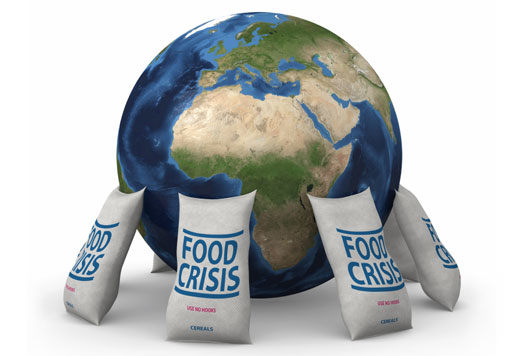
In early 2008 the UN World Food Programme[1] flagged more than 30 nations facing increasing food insecurity, as a direct result of instability in the market. 22 of those countries were in Africa, and as you’ll see in the “Mauritania Example” page, things became very grim, very quickly.
It all started in mid-2007, when traders began to notice that after a prolonged drought in Australia and a poor season in Europe and North America, that grain prices were soaring (up more than 80% from 2005-2008.) High wheat prices soon created a global “fend for yourself” environment, with large-scale stockpiling in almost every country worldwide. Nations that exported grain soon began to restrict outgoing supplies drastically, with sky-high taxes and tariffs. Nations that did not grow their own grain began to desperately collect and hoard, with prices increasing almost daily.
Countries like the USA and Japan saw increased prices, a few bare shelves, and worsening food insecurity in underprivileged neighborhoods; while other parts of the world saw near-total upheaval[2]. There were riots in more than 14 countries, widespread food-related violence, destabilized governments (including a new parliament in Mauritania[3] and a new Prime Minister in Haiti), and more than 100 million people thrust deeper into poverty. [4]
It was a brutal combining of events, which led to unbearable suffering, political turmoil, and an increase in economic inequality which has yet to completely turn around.
